Our own product
DraftPay
DraftPay is our own product: revenue operations for small studios. It follows the money from the agreement with a client to the cash in the bank, so a studio can see what it signed, what it billed and what it collected, and catch the work it forgot to bill.
- Sector
- Our own product
- What we did
- Product design, Development, Design system
- Built with
- Next.js, React Server Components, Server Actions, Postgres, Tailwind CSS, Recharts, MCP
- Year
- 2026
- Status
- Live
What happened
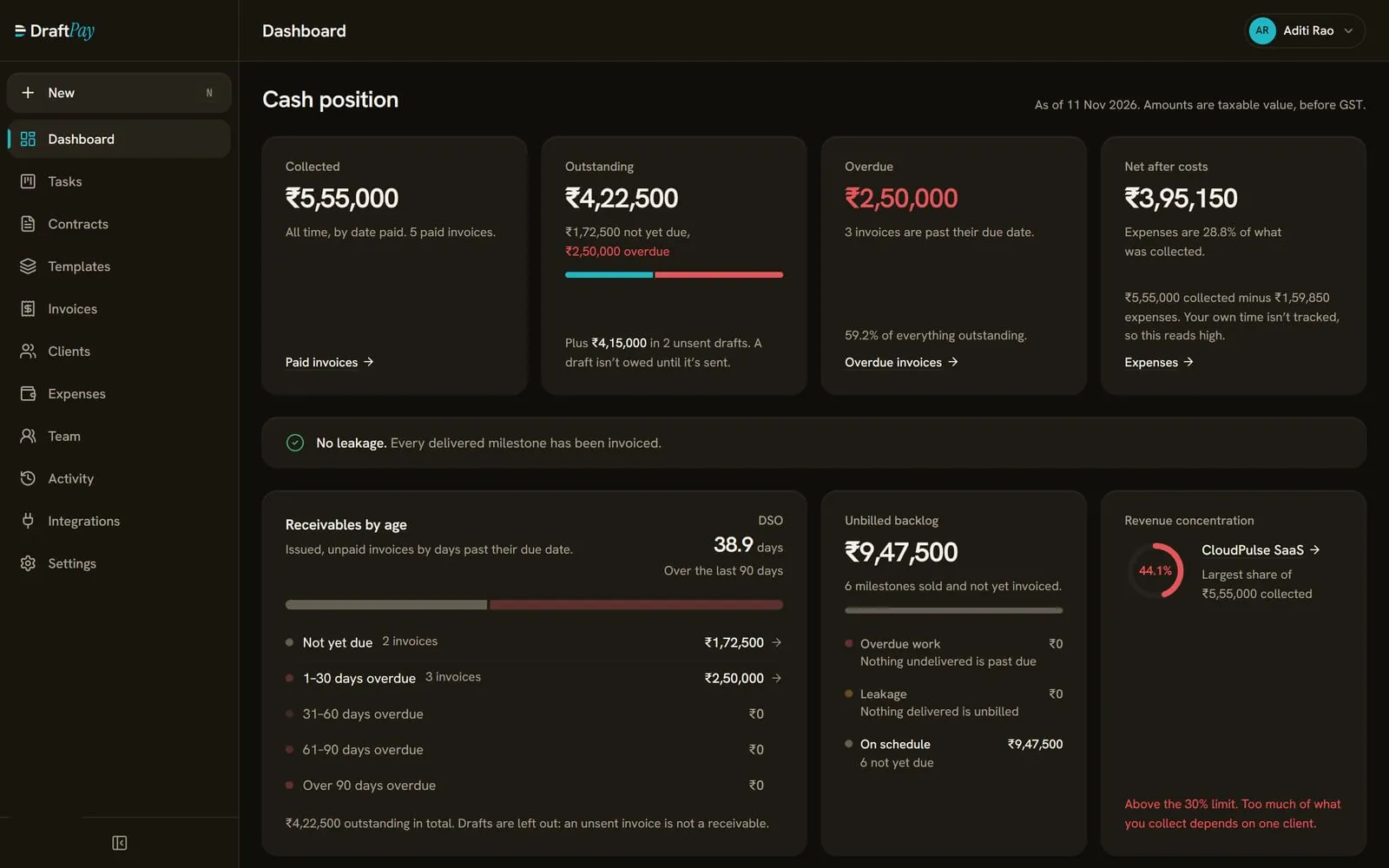
Every invoice traces back to a milestone and a signed contract, so DraftPay can point at work that was delivered and never billed.
The question
Where does a small studio quietly lose money, and can software catch it before the month closes?
The brief
DraftPay started with a question every small studio asks at the end of a month: which of our projects has finished work we haven’t billed yet? The usual answer lives in a spreadsheet, a folder of contracts and a payments app, and nobody owns the gaps between them.
So DraftPay keeps the whole chain in one place. A contract is made from a template, it’s split into milestones, each milestone is delivered and then invoiced, and each invoice is marked paid when the money arrives. Because the chain is enforced, the dashboard can say things separate tools can’t: what’s contracted but not yet billed, what’s billed but not yet paid, and what was delivered and never billed at all.
The screens here are from the demo workspace, with a made-up studio and made-up clients. Ravoren runs its own work through DraftPay before any feature is offered to anyone else.
How it works
Step by step.
Start from a template.
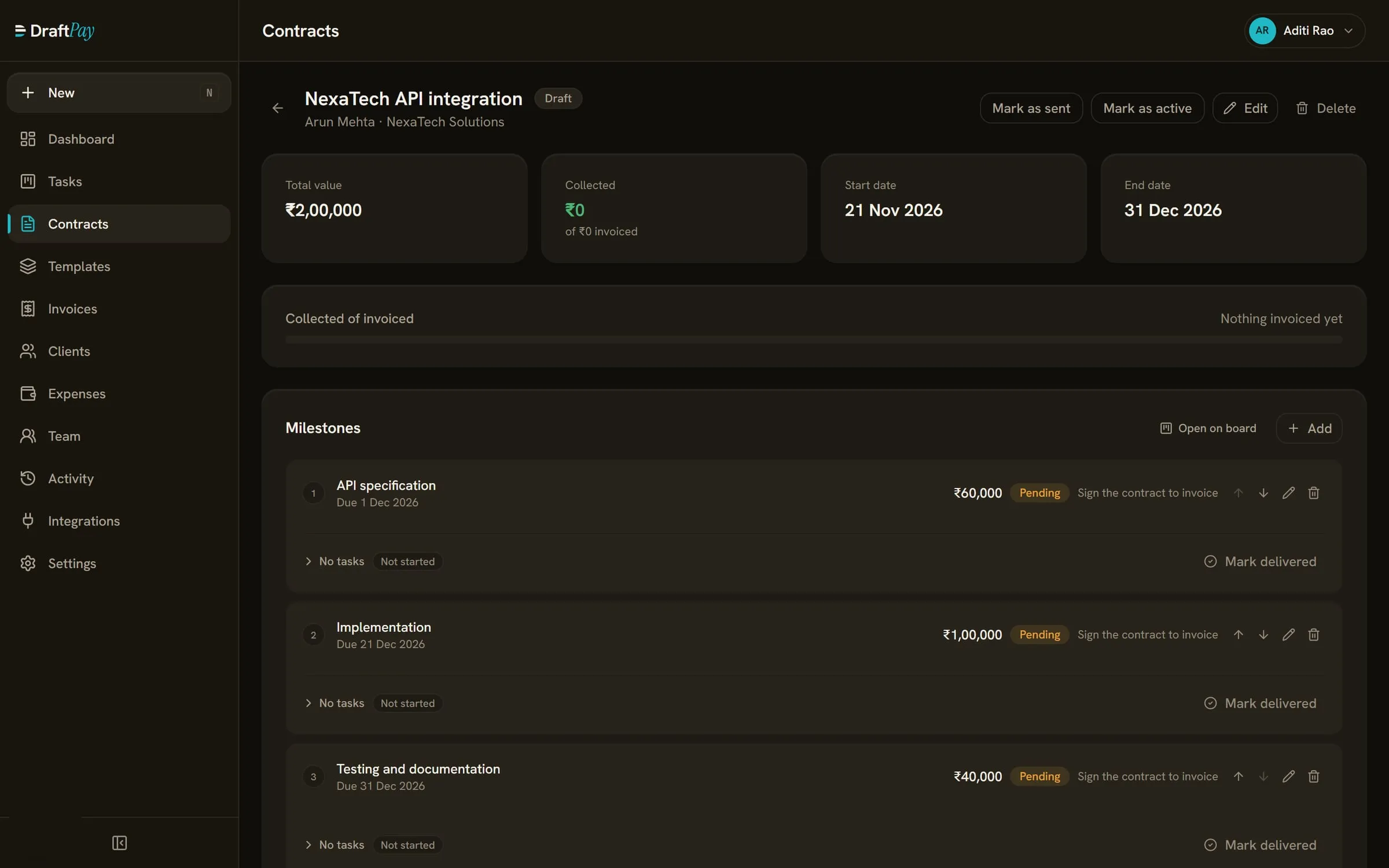
Pick a contract template, fill in the client and the scope, and the milestones arrive with it, each with an amount and a due date.
Deliver milestone by milestone.
A milestone is marked delivered by hand, or when all of its tasks are done. Delivery and billing are tracked separately.
Invoice what was delivered.
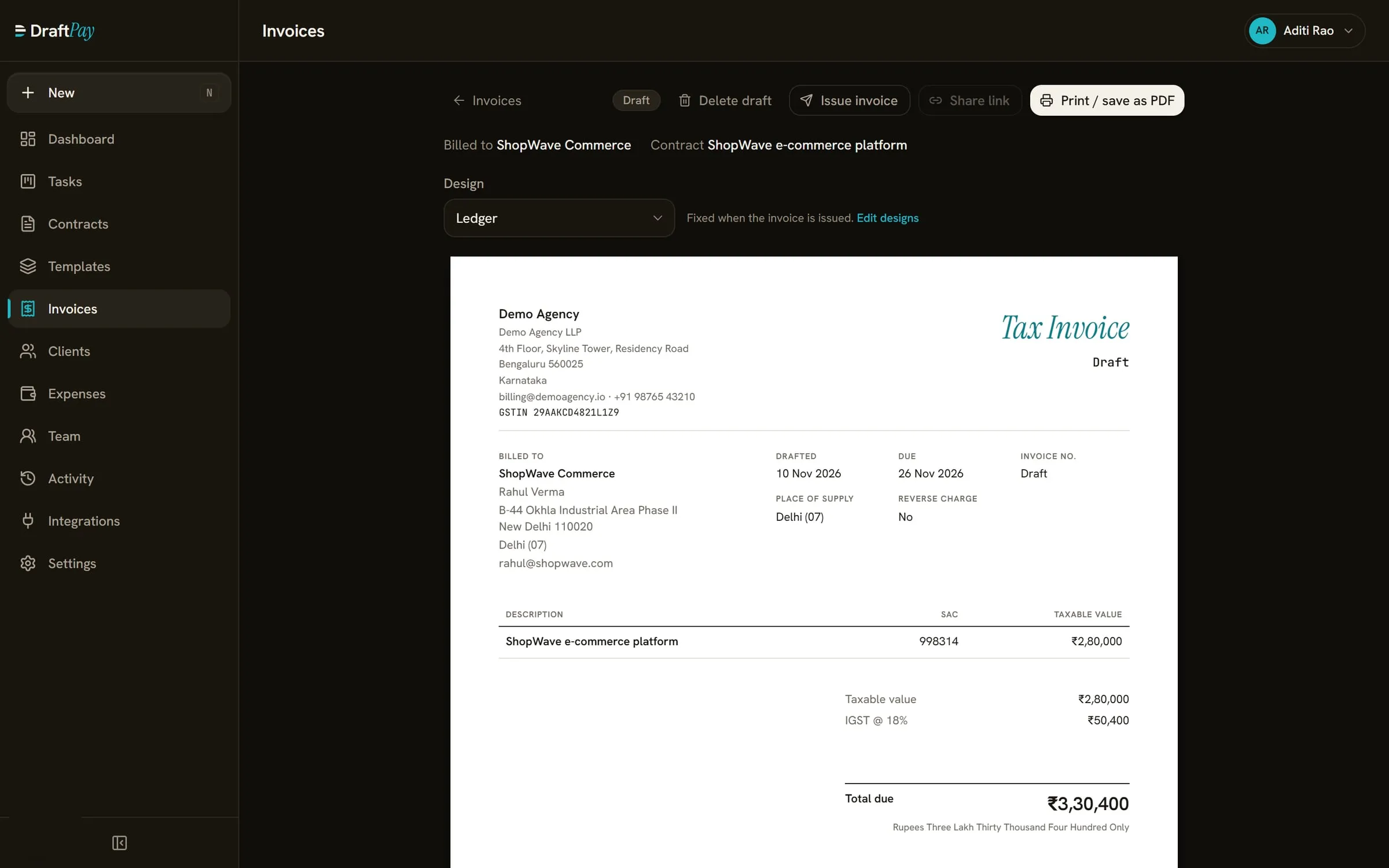
A delivered milestone becomes a tax invoice in the studio’s own design, with a link the client can open without an account.
Watch the cash.
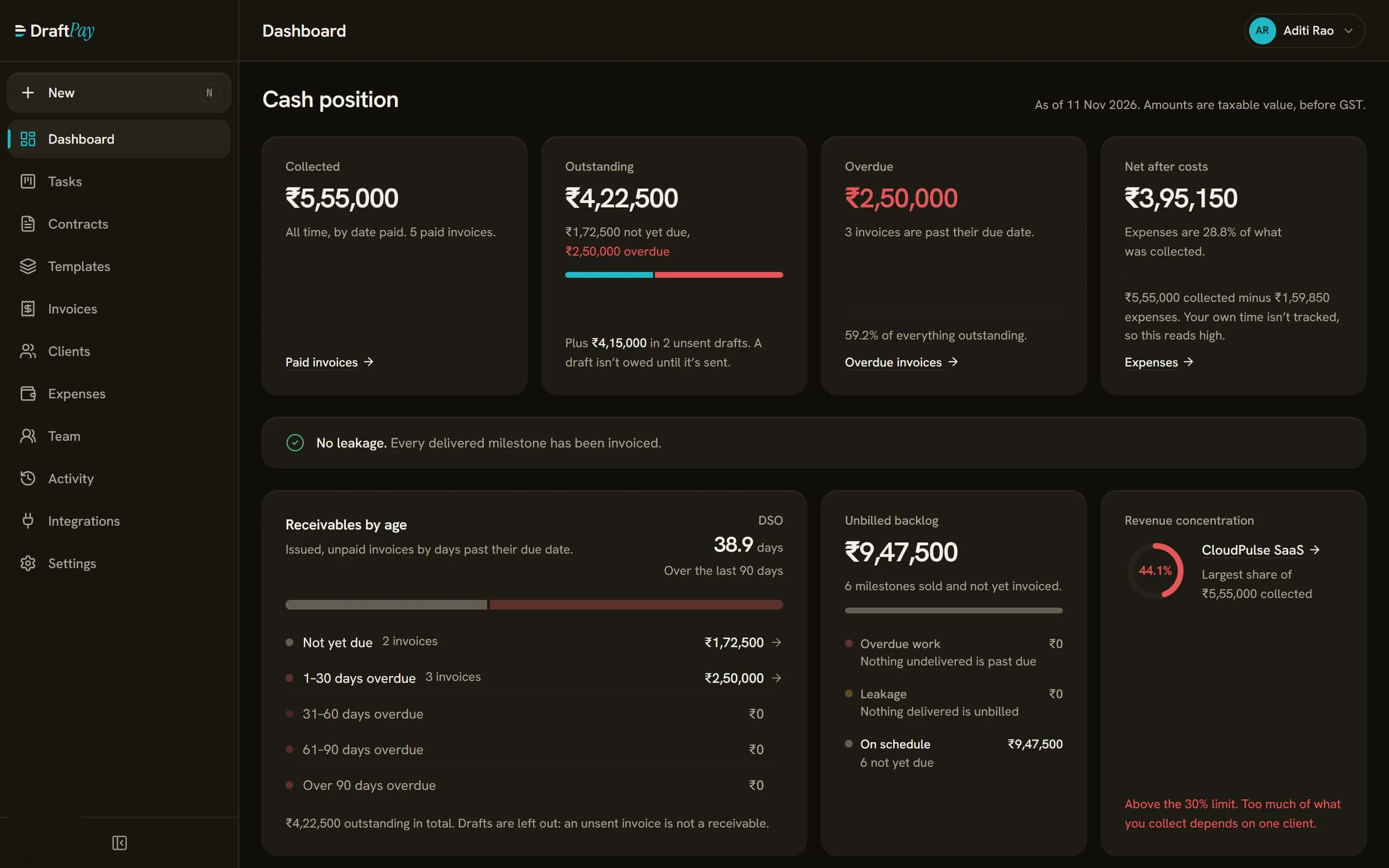
The dashboard shows what’s collected, outstanding and overdue, and flags any delivered work that nobody has billed yet.
Screens
What it looks like.
The problem
What was in the way.
Contracts and invoices don’t talk.
Most tools make contracts and invoices as two unrelated documents, so nothing connects what was agreed to what was billed.
Delivered, never billed.
Work that is finished and never invoiced is money a busy studio can lose without anyone noticing.
Invoicing is the easy part.
Free invoice makers are everywhere. What’s missing is the part before the invoice: the contract and the milestones it’s paid against.
Principles
What we held to.
Nothing exists on its own.
An invoice can’t exist without a milestone, and a milestone can’t exist without a contract. The database holds the chain, not a convention.
Three numbers, not one.
Contracted, invoiced and collected stay separate for every engagement, because each answers a different question.
Every figure says what it leaves out.
The dashboard explains itself in words: what a number counts, and what it doesn’t, such as the studio’s own time.
What we built
What shipped.
Leakage, caught early.
Delivered milestones that were never invoiced show up on the dashboard before the month closes, with their value.
Contracts from templates.
A wizard fills a template’s variables. The contract keeps its own copy of the design and can be shared as a document.
Tax-correct invoices.
The right tax split from the place of supply, export invoices, service codes, the amount in words, financial-year numbering and print to PDF.
Expenses and margin.
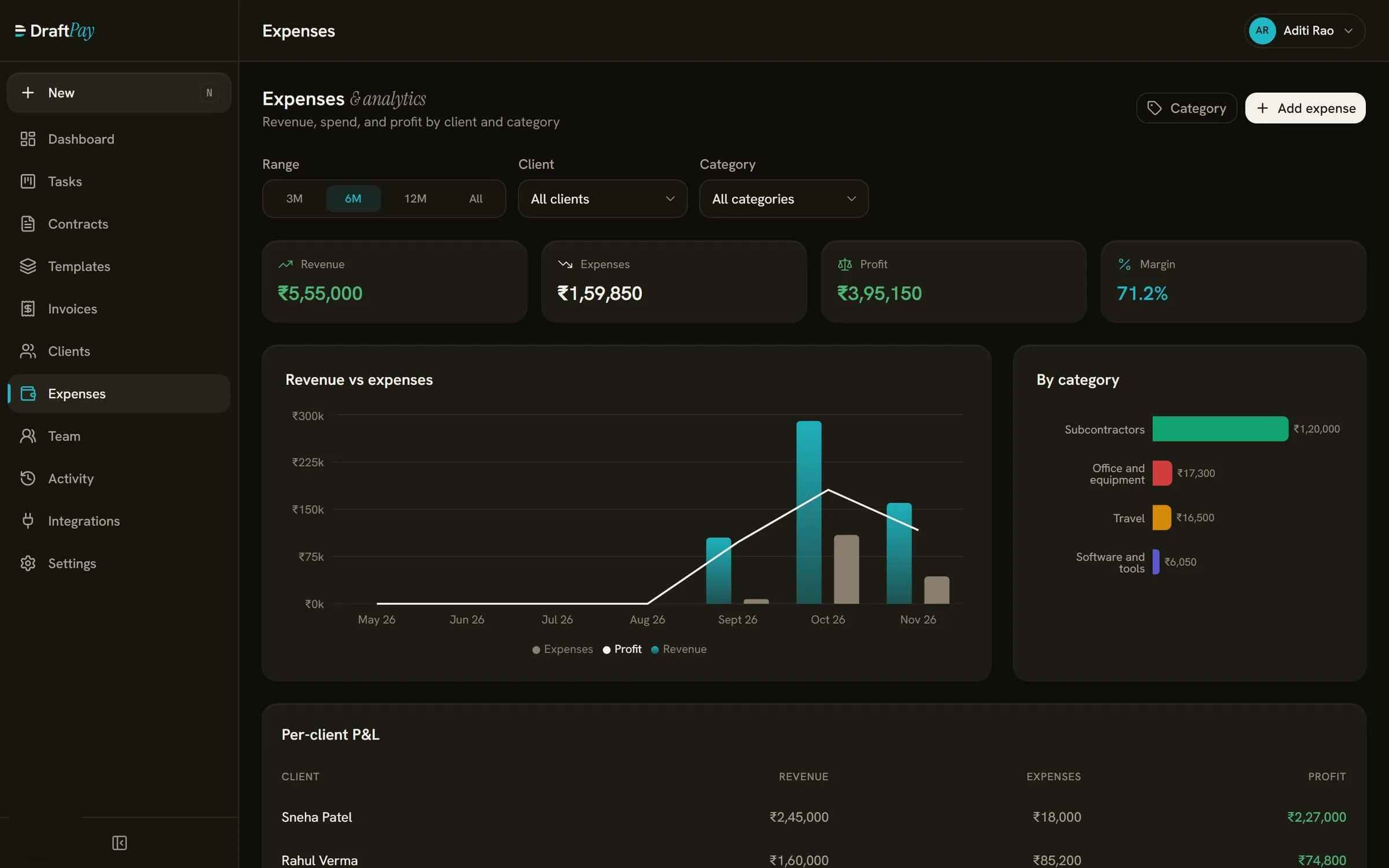
Revenue, spend and profit by month, client and category, with a profit and loss for every client.
Agents over MCP.
An MCP server gives AI agents their own tokens, so they can read and act on the books like a member of the team.
What we took away
Learnings.
The chain is the product.
Connecting the contract to the invoice is what makes leakage visible. Two separate tools can’t show it, however good each one is.
Write the decisions down.
Every load-bearing choice has a written decision record, so the next change starts from the reason, not a guess.
Run it on ourselves first.
New features are built for Ravoren’s own work first, and only then made ready for other studios.
Services in this projectWebsites
Next projectRavoren, Flex modeGot something worth building? Talk to us.
A 30 minute call, no deck, no pitch. Tell us what you’re building and we’ll tell you honestly what we’d do.